
for staged investment across metro Perth, driving towards 200k national members by 2034.
through an evidence-based staged framework for investment.
where informal participation is strong but access to organised pathways is limited.
WA’s recreational running participation dwarfs formal athletics, but the state’s synthetic track network hasn’t kept pace with where people actually live, train and compete. Athletics West needed defensible evidence to direct investment over the next four years.
Athletics West used ActiveXchange’s demand modelling to map current participation and forecast growth across every WA local government area – the same platform used by state and national sporting organisations to guide investment decisions.
Address gaps in access, quality, and capacity across both Track & Field and recreational running
Guide state, regional and local stakeholders toward coordinated, high-impact investment decisions.
Build the evidence base for the warm up track facility proposal.
Growth corridors in the north, south, and south-east remain under-served, forcing longer travel times and constraining club development. Membership levels sit significantly below forecast demand across these areas indicating that access and facility constraints, not interest, are limiting participation.
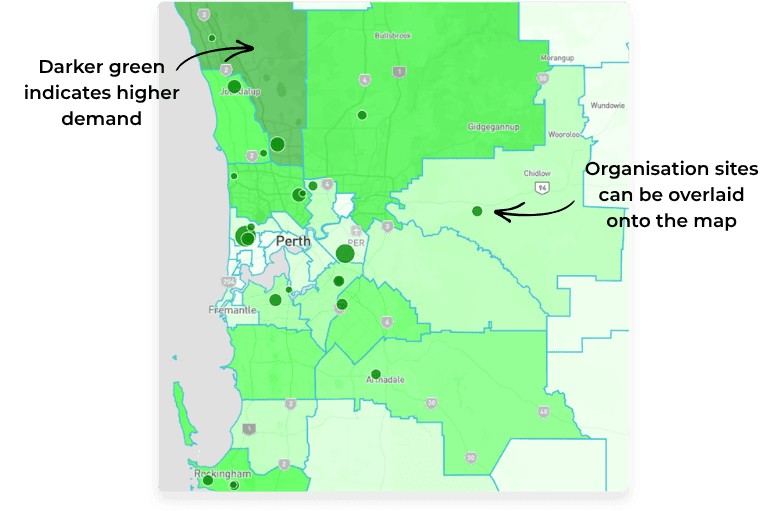
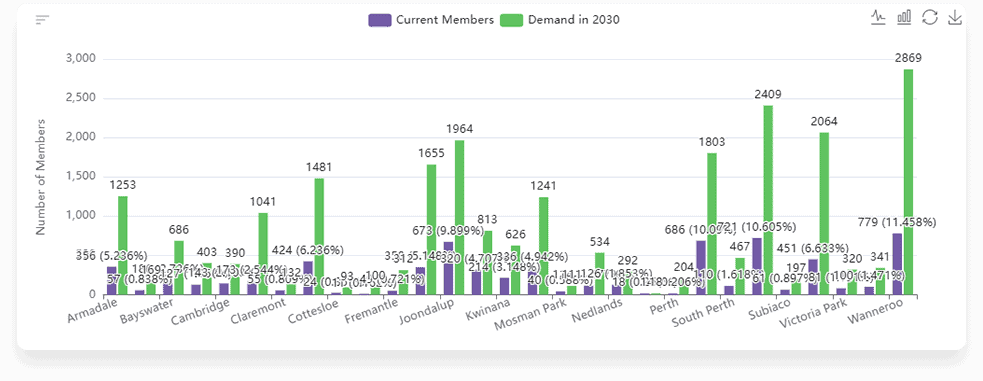
Demand modelling identified the need for additional facilities in the City of Armadale, City of Melville and City of Canning to meet current demand. Importantly, the strategy focuses on piloting satellite training hubs, improving lighting and access windows to maximise year-round usability.
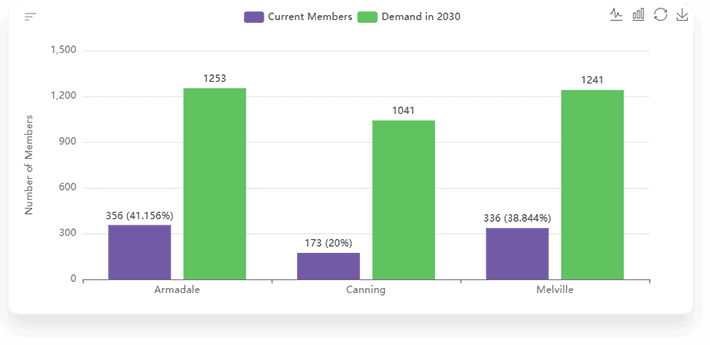
The original priority LGAs (from 2021-2024 plan) continue to dominate the demand gap profile, while Gosnells and Armadale have emerged as clear new pressure points since the previous planning cycle.
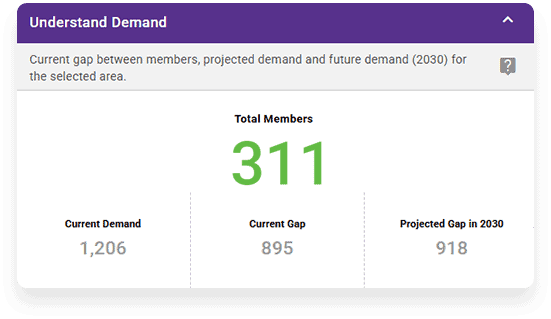
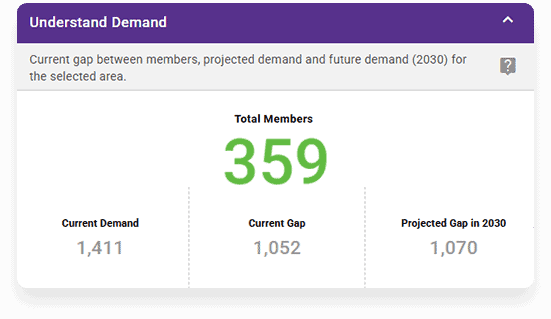
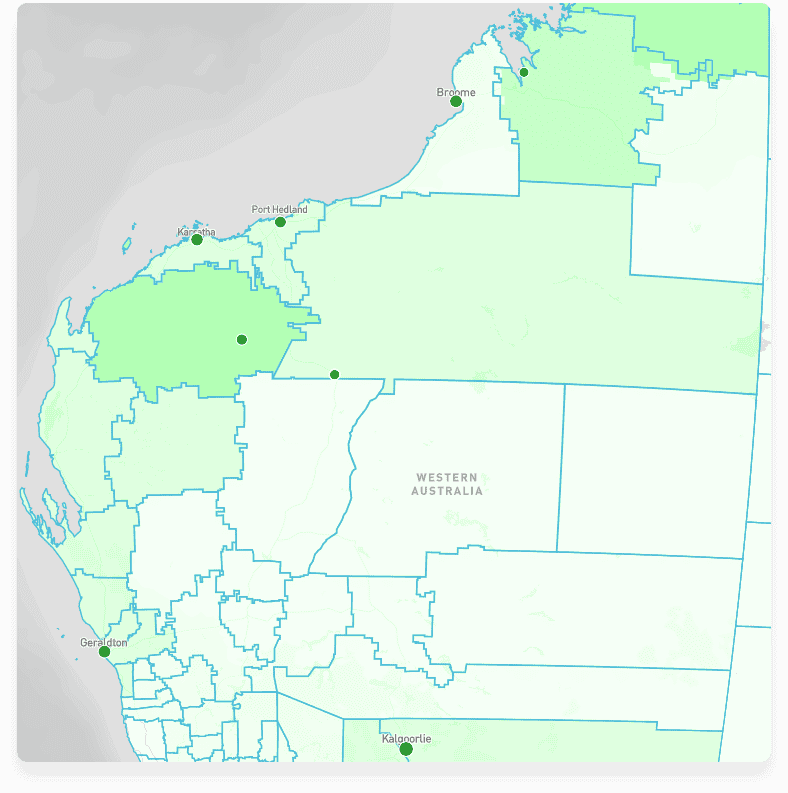
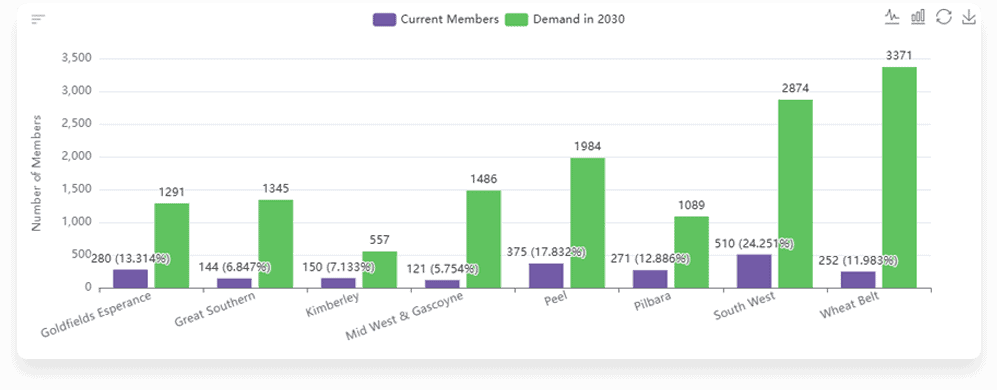
Regional Western Australia shows some of the largest unmet demand relative to membership, particularly across the Wheatbelt, Mid-West/Gascoyne, Great Southern, Peel and South West regions. Informal running participation is strong, but access to quality facilities and organised pathways remains limited, reinforcing the need for flexible, multi-use regional models that support training, schools and events rather than standalone competition venues.
The 2025–2028 plan gives Athletics West defined priorities, scalable solutions, and a strong case for warm-up infrastructure as a critical system enabler, driving an estimated $1-2M economic benefit per annum, supported by a strong data intelligence foundation.
Re-established the requirement for facilities to have a broad spectrum of uses to encourage participation and retention, ranging from; casual running, school carnivals, club training and pathway development to drive towards Australian Athletics target of 200k members nationally by 2034.
Regional Western Australia exhibits some of the largest unmet demand relative to membership, with informal running participation strong and access to quality facilities and organised pathways limited. This reinforces the need for flexible, multi-use regional models that support training, schools, and events rather than standalone competition venues.
Whether you’re planning facility investment, building a case for government funding, or shaping a national participation strategy, ActiveXchange gives you the same evidence base Athletics West used, tailored to your sport, your regions and your growth goals.
“This plan was developed in close collaboration with key stakeholders across state and local government, venues, and the athletics and running community, which is underpinned by the most up-to-date participation and demand analysis available. Insights from the Australian Sports Commission (AusPlay), ActiveXchange APAC and Department of Creative Industries, Tourism and Sport were critical in ensuring our decisions are data-driven and aligned to how Western Australians actually participate.
A huge thanks to our partners and contributors for their collaboration, insight and commitment to shaping a future-focused facilities network for WA.”
You can read the full Athletics West State Facilities Plan 2025–2028 here.
See how state and national sporting bodies use demand data to guide facility investment, funding cases and participation strategy.
Subscribe now to keep reading and get access to the full archive.