July 2, 2026

Ben Jones
Group Chief Commercial Officer
General Manager, UK & Europe
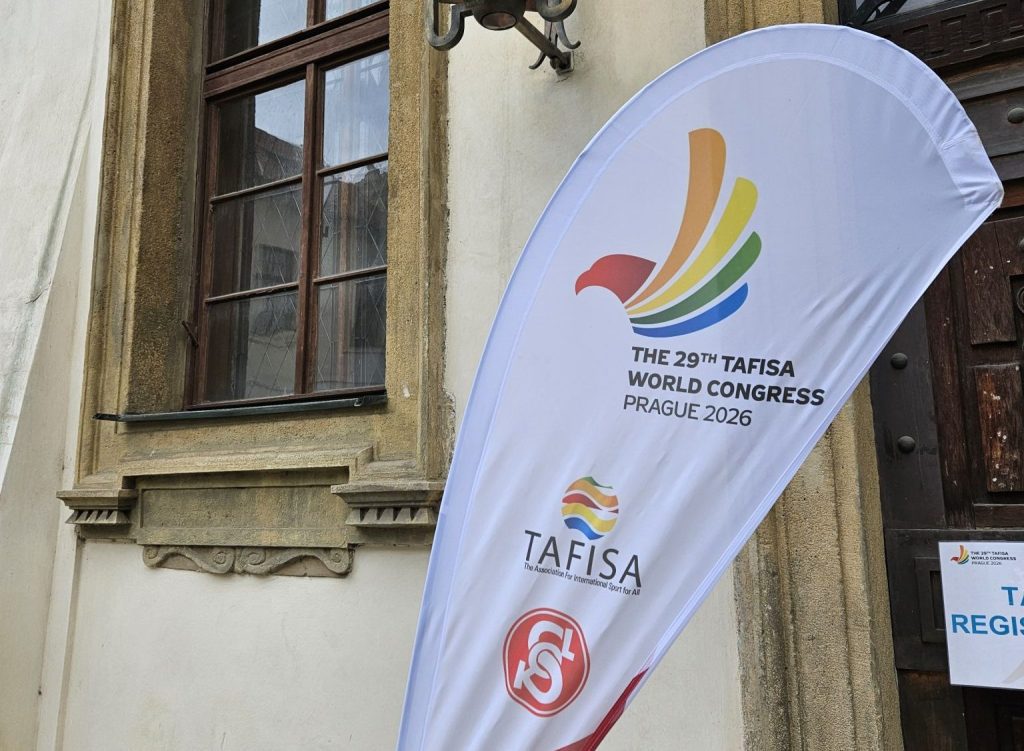
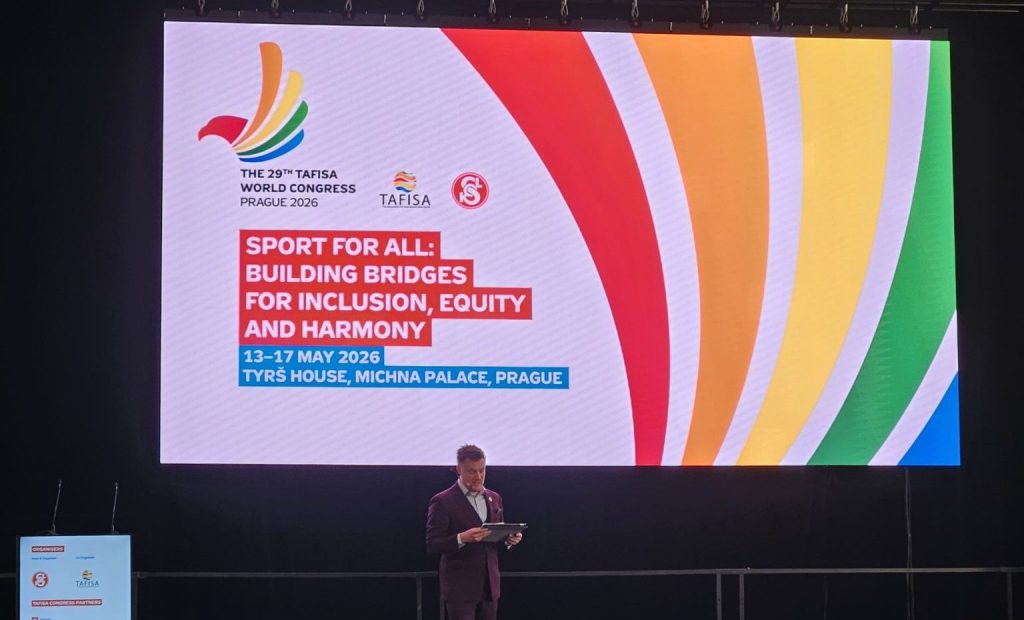
In May of this year I was involved in the delivery of a session at TAFISA’s 2026 Global Summit, in Prague, Czech Republic. My presentation followed a panel discussion which included international federations, the IOC, municipal government, and a media company, and the focus was on public, private, and non-profit sector collaboration to enhance community empowerment.
Our session was the very last of the first day, so I was able to enjoy the welcome, keynote, and first few sessions before my own.
What struck me upon arriving at the congress was the diversity of representation in attendance. There were people from all over the world. I recognise that this shouldn’t be particularly surprising for a global event, but seeing people who had traveled such a long way, some from countries in which the populations do not enjoy the same freedoms that I have taken for granted my whole life, reminded me that sport is one of few universal languages, and of its unique power to enable social advancement.
Sometimes sport and movement is the vehicle, not the destination.
A sector united by belief, and limited by it
Having worked in sport and movement my whole career, in the public, non-profit, and now private sector, I’ve been to many different events and heard many people speak on the subject. It was unsurprising to hear lots of the same messaging I’ve heard over the years; people talking about the political and practical challenges of reducing inactivity, as well as many incredible examples across sports and across nations, where sport and movement has made a real difference, against the odds.
Listening to people speaking throughout the day it was clear that all of us who were there have something in common. We believe in the power of sport and physical activity for good. This might sound a little trite, but I think it is worthy of note because that belief brings with it many positives which help the cause, but in my view those beliefs may also be a factor which limits progress.
With the notable exception of the US, throughout the world, sport and movement is largely a community-led endeavour which is heavily reliant on volunteers in order to function. In my overwhelming experience, people who gravitate towards a career in sports development/sport for good, do so in no small part because it’s something that they care about. They believe in the mission and it can often be a major part of an individual’s identity.
Working in sport in the public or non-profit sector, it’s not unusual to face judgement from volunteers based on the perception that you are being paid to do things that the rest of the sector does for free. The privilege of getting to do something you love as a career does not go unnoticed, and is something that is acknowledged by those of us who have been fortunate enough to have been in that position.
The reason I am writing about these sentiments and perspectives is because I think they extend to how the public and non-profit sector often feel about, and engage with, the private sector.
There is, in my opinion, an innate and deeply ingrained skepticism and resistance to work closely with the private sector across the public and nonprofit sectors in sport and physical activity.
The prevailing view, which may simply be unconscious bias rather than a known belief, is one which assumes private businesses work in sport and physical activity in order to exploit the altruistic and voluntary-led sector, for commercial gain.
If I’m honest, this is a view I held earlier in my career.
What each sector brings
However, having worked across all three sectors over the last 25 years I have a different perspective.
Each of the sectors brings something different and essential to the development of sport and physical activity.
The public sector is the most significant asset-owner/operator of places where people are active. They play a crucial role in shaping environments and ensuring equitable access to leisure and recreation facilities.
The non-profit sector often connects directly with communities and is largely responsible for the delivery of community sport and physical activity in terms of clubs, coaches, and volunteers.
The private sector provides infrastructure and the delivery of those products and services that the market demands. Their objective is to be profitable, but (crucially), this is only possible if the products and services that are provided are in demand, and perceived to be of sufficient value in order to be purchased.
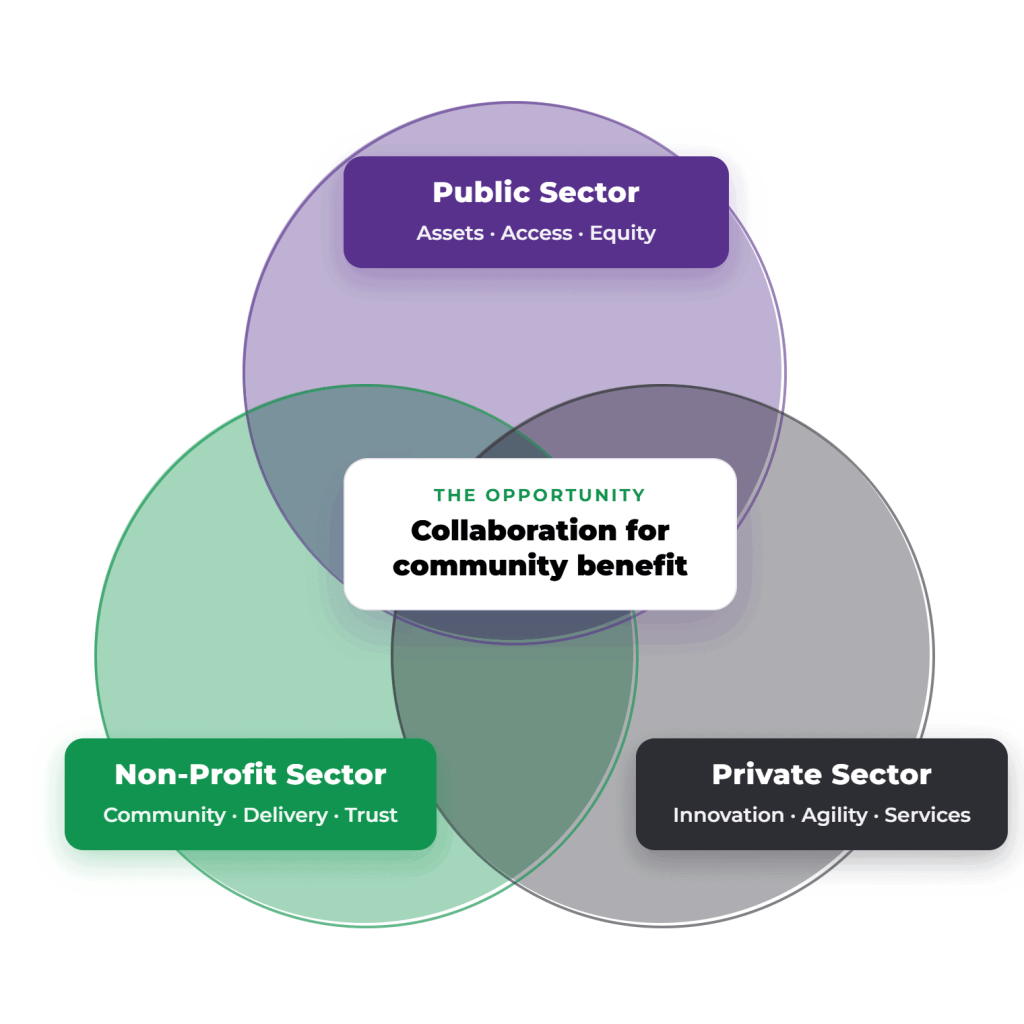
Each of these sectors plays a specific and necessary role in the eco-system, which, in an optimally functioning sport and physical activity sector, leads to a level of collaboration that enables everyone across society to be active in ways which work for them.
The public sector is constrained by bureaucracy and size, often stifling innovation. The non-profit sector is often constrained by short-term funding which leads to long-term financial uncertainty, without the policy levers the public sector wields. The private sector is limited by a requirement to be profitable, maintain positive cash-flow, and the real risk of ceasing operations if products and services do not evolve and improve in line with expectations.
Acknowledging these limitations, it is equally important to recognise that there is the centre of a Venn diagram which maximises the benefits of the statutory and influential role of the public sector, the community-led and community-connected provision of services through the non-profit sector, and the agility and innovation of the private sector.
Like all relationships, this collaboration should always be founded on honesty, trust, and respect, with communication playing a central role in supporting these approaches.
If done well, communities benefit from affordable, accessible, and attractive places and activities which, in equal measure, enables the public, private, and nonprofit sectors to achieve their own objectives.
Where ActiveXchange fits in
At ActiveXchange, we recognise that we are one part of a much larger ecosystem. Our role is not to replace or direct the work of others, but to support it by providing the insight, innovation, and tools that help organisations make better decisions, reach more people, and achieve greater impact. By understanding the challenges faced across all three sectors, and by approaching relationships with honesty, trust, and a genuine commitment to shared success, we hope to play our part in helping the sector grow and enabling more people to benefit from sport and movement. Ultimately, when collaboration works well, everyone benefits: organisations are better able to achieve their objectives, communities are better served, and more lives are improved through being active.